Bai Cha Recipe – How to Make Cambodian Fried Rice
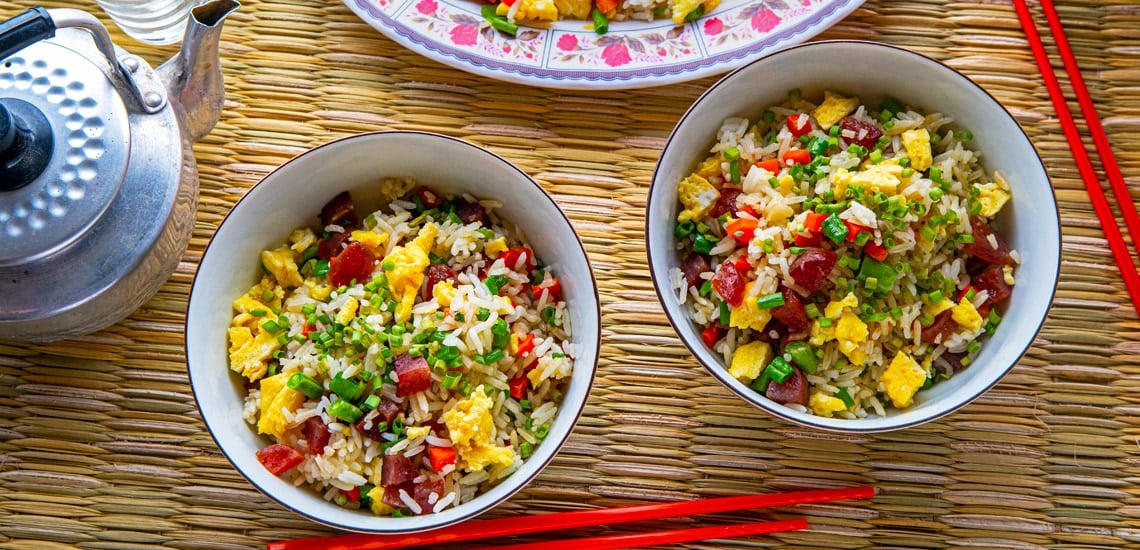
Bai Cha (បាយឆា), the Cambodian version of fried rice, is a cornerstone of everyday Khmer cuisine. Simple, comforting, and endlessly adaptable, Bai Cha is found everywhere from family kitchens and roadside eateries to late-night street food stalls across Phnom Penh, Siem Reap, and provincial towns.
While fried rice exists throughout Asia, Bai Cha is distinctly Khmer in its use of fish sauce, garlic, Kampot black pepper, and local proteins, creating a savory, aromatic dish that reflects Cambodia’s balance-driven culinary identity.
What Is Bai Cha?
Bai Cha translates directly to “fried rice.” It is made by stir-frying cooked jasmine rice with eggs, vegetables, and protein such as chicken, pork, beef, shrimp, or Chinese sausage. The dish is seasoned with a combination of fish sauce, soy sauce, oyster sauce, and pepper, giving it depth without heaviness.
Unlike heavily sauced fried rice dishes, Bai Cha is typically light, fragrant, and slightly smoky, relying on high heat and aromatics rather than oil or sugar.
Cultural Significance of Bai Cha
Bai Cha plays an essential role in Cambodian daily life. It is often prepared as a quick meal using leftover rice, demonstrating the Khmer tradition of minimizing waste and maximizing flavor.
It is also a popular late-night dish, especially served with a fried egg on top or paired with sliced cucumbers and chili sauce. Because of its simplicity and flexibility, Bai Cha is often one of the first dishes Cambodian home cooks learn to master.
Key Ingredients in Bai Cha
Authentic Bai Cha relies on pantry staples and fresh aromatics:
- Cooked Jasmine Rice – preferably day-old for best texture
- Eggs – scrambled into the rice
- Protein – chicken, pork, beef, shrimp, or Chinese sausage
- Garlic – primary aromatic
- Vegetables – carrots, scallions, cabbage, or peas
- Fish Sauce – essential Khmer seasoning
- Soy Sauce and Oyster Sauce – add umami and color
- Kampot Black Pepper – signature aroma
- Vegetable Oil – for stir-frying
Step-by-Step Guide: How to Make Bai Cha
Ingredients (Serves 4)
- 4 cups cooked jasmine rice (cold)
- 2 eggs
- 250 g chicken, pork, shrimp, or beef, diced
- 3 cloves garlic, minced
- 2 tbsp vegetable oil
- 1½ tbsp fish sauce
- 1 tbsp soy sauce
- 1 tbsp oyster sauce
- ½ tsp Kampot black pepper
- 1 cup mixed vegetables (carrot, scallions, cabbage)
- Optional: cucumber slices and chili sauce for serving
Instructions
Step 1: Prepare the Rice
Break up any clumps in the cold rice using your hands or a fork. Set aside.
Step 2: Heat the Wok
Heat a wok or large pan over medium-high heat. Add vegetable oil and minced garlic, stirring until fragrant.
Step 3: Cook the Protein
Add the diced protein and stir-fry until nearly cooked through.
Step 4: Add Eggs
Push the protein to one side of the pan. Crack in the eggs and scramble lightly, then mix with the protein.
Step 5: Add Rice and Seasoning
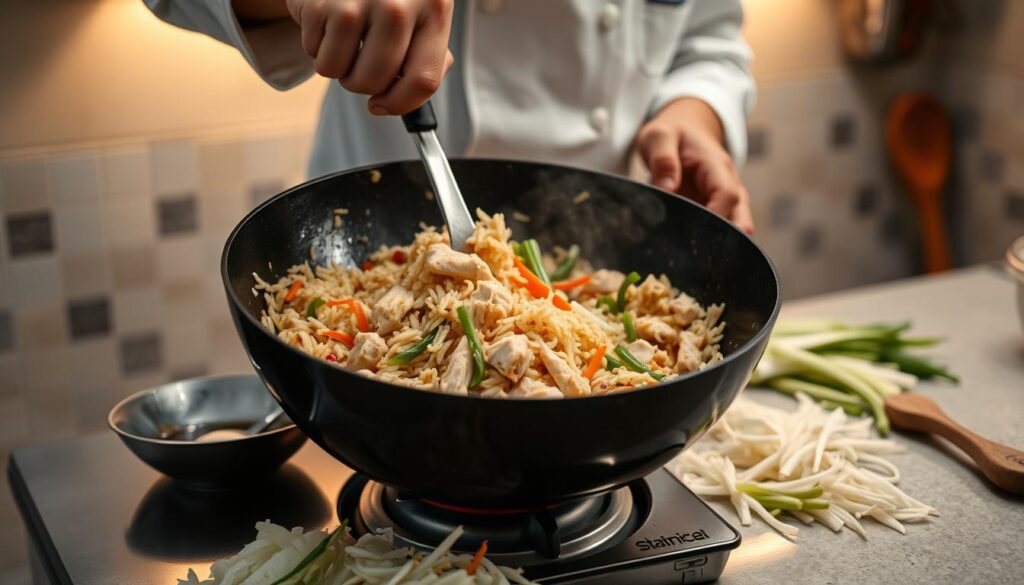
Add rice to the wok, stirring continuously. Pour in fish sauce, soy sauce, oyster sauce, and sprinkle in Kampot pepper. Toss well to coat evenly.
Step 6: Add Vegetables and Finish
Add vegetables and stir-fry until just tender. Taste and adjust seasoning if needed.
Step 7: Serve Hot
Remove from heat and serve immediately. Optional fried egg on top adds richness.
Flavor and Texture Profile
Bai Cha is savory, lightly smoky, and aromatic, with fluffy grains of rice coated in umami-rich seasoning. The fish sauce adds depth without overpowering, while Kampot pepper provides warmth and fragrance.
The dish is satisfying yet not heavy, making it ideal for any time of day.
Tips for Perfect Bai Cha
- Use day-old rice to prevent mushy texture
- Cook over high heat for authentic flavor
- Add seasoning gradually to avoid excess salt
- Customize proteins and vegetables to preference
Why You Should Try Cooking Bai Cha
Cooking Bai Cha at home offers insight into Cambodian everyday cooking, where simplicity meets depth of flavor. It is quick, adaptable, and deeply comforting, making it a reliable staple for both beginners and experienced cooks.
By mastering Bai Cha, you gain a foundational understanding of Khmer stir-fry techniques and seasoning balance.