Nom Plae Ai Recipe – Cambodian Glutinous Rice Balls in Coconut Sauce
Nom Plae Ai (នំផ្លែអាយ) is a beloved traditional Cambodian dessert known for its soft, chewy texture and comforting sweetness. Made from glutinous rice flour filled with palm sugar and served in warm coconut sauce, this dessert is a staple of Khmer festivals, family gatherings, and temple celebrations.
Simple in appearance yet deeply satisfying, Nom Plae Ai reflects Cambodia’s long-standing dessert traditions, where rice, coconut, and palm sugar come together in perfect balance.
What Is Nom Plae Ai?
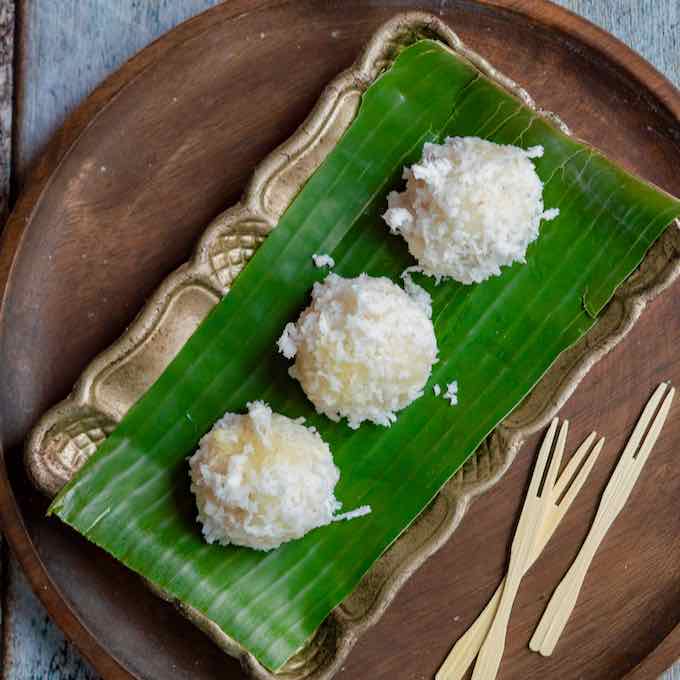
Nom Plae Ai consists of small glutinous rice balls filled with palm sugar, gently boiled until tender, then served in a lightly sweetened coconut milk sauce. As the rice balls cook, the palm sugar inside melts, creating a warm, syrupy center.
The dessert is typically garnished with grated coconut and sesame seeds, adding aroma and texture.
Cultural and Historical Significance
Nom Plae Ai is commonly prepared during:
- Khmer New Year
- Pchum Ben
- Buddhist ceremonies
- Family celebrations
It is often made communally, with family members shaping the rice balls together, reinforcing the social nature of Khmer cooking. The dessert also symbolizes abundance and unity, as rice and coconut are central to Cambodian agriculture.
How Nom Plae Ai Differs from Similar Desserts
While similar rice ball desserts exist across Southeast Asia, Nom Plae Ai is distinct in:
- Its molten palm sugar center
- Light, aromatic coconut sauce
- Balanced sweetness rather than heavy syrup
- Use of glutinous rice flour without additional starches
These characteristics align with the Khmer preference for gentle, warming desserts.
Key Ingredients Explained
Glutinous Rice Flour
Provides the signature chewy texture essential to Nom Plae Ai.
Palm Sugar
Traditionally used for its deep caramel notes and smooth melting quality.
Coconut Milk
Creates a rich yet light sauce that complements the rice balls.
Salt
Used sparingly to balance sweetness.
Grated Coconut and Sesame Seeds
Optional garnishes that add aroma and contrast.
Step-by-Step Guide: How to Make Nom Plae Ai
Ingredients (Serves 6–8)
- 300 g glutinous rice flour
- 180 ml warm water
- 120 g palm sugar, chopped into small pieces
Coconut Sauce:
- 500 ml coconut milk
- 2 tbsp sugar (adjust to taste)
- Pinch of salt
Garnish (Optional):
- Grated coconut
- Toasted sesame seeds
Instructions
Step 1: Prepare the Dough
Place glutinous rice flour in a bowl. Gradually add warm water and knead until a smooth, pliable dough forms.
Step 2: Shape and Fill
Pinch off small portions of dough. Flatten slightly, place a piece of palm sugar in the center, then seal and roll into a smooth ball.
Step 3: Cook the Rice Balls
Bring a pot of water to a gentle boil. Add the rice balls and cook until they float to the surface. Continue cooking for 1–2 minutes.
Step 4: Prepare the Coconut Sauce
In a saucepan, gently heat coconut milk with sugar and salt. Do not boil.
Step 5: Assemble and Serve
Transfer cooked rice balls to serving bowls. Pour warm coconut sauce over them.
Step 6: Garnish
Top with grated coconut or sesame seeds if desired.
Texture, Flavor, and Sensory Experience
Nom Plae Ai offers a soft, chewy exterior with a molten palm sugar center, balanced by creamy coconut sauce. The contrast between warm sweetness and subtle saltiness creates a comforting, nostalgic flavor profile.
Tips for Perfect Nom Plae Ai
- Seal dough tightly to prevent sugar leakage
- Use low heat for coconut sauce
- Serve immediately while sugar center is molten
- Adjust sweetness to preference
Variations and Regional Touches
- Pandan-infused dough for aroma
- Smaller bite-sized balls for street food style
- Coconut cream drizzle for richer texture
Why Nom Plae Ai Matters in Khmer Cuisine
Nom Plae Ai represents the heart of Cambodian dessert culture humble ingredients, shared preparation, and comforting flavors. It is a dessert rooted in tradition, often prepared by hand and served with care.
Making Nom Plae Ai at home preserves a dessert passed down through generations and offers a deeper connection to Khmer culinary heritage.