
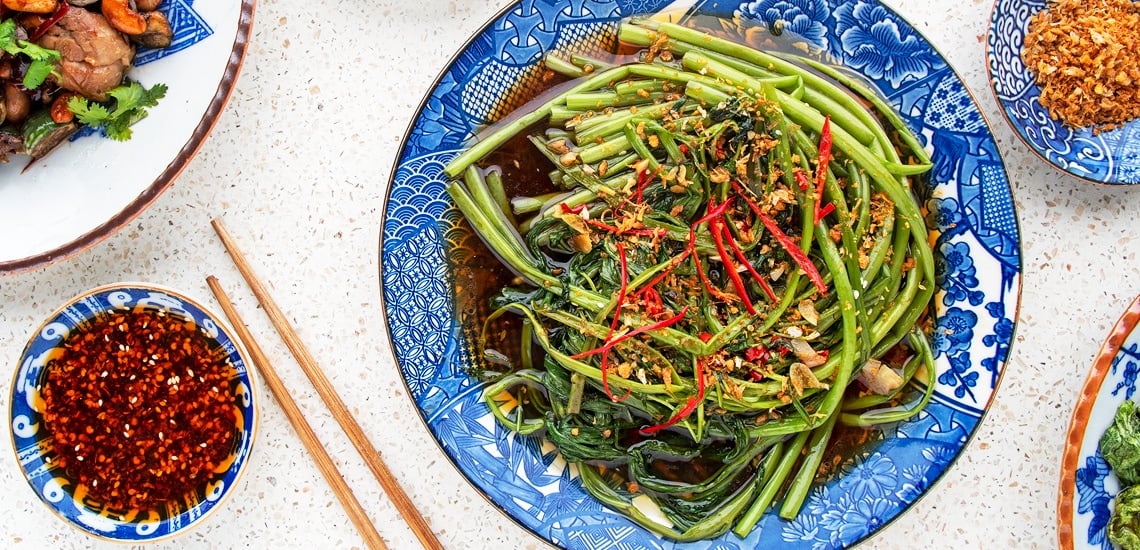
Cha Prey Recipe – Cambodian Stir-Fried Morning Glory with Garlic
Cha Prey (ឆាប្រឡិត / commonly known as stir-fried morning glory) is one of the most popular and essential vegetable dishes in Cambodian cuisine. Made from morning glory (water spinach) quickly stir-fried with garlic and simple seasonings, Cha Prey represents the heart of everyday Khmer cooking fresh ingredients, high heat, and clean, balanced flavor.
Served in homes, street-side eateries, and restaurants across Cambodia, Cha Prey is a staple accompaniment to rice and grilled meats, valued for its affordability, speed, and nutritional benefits.
What Is Cha Prey?
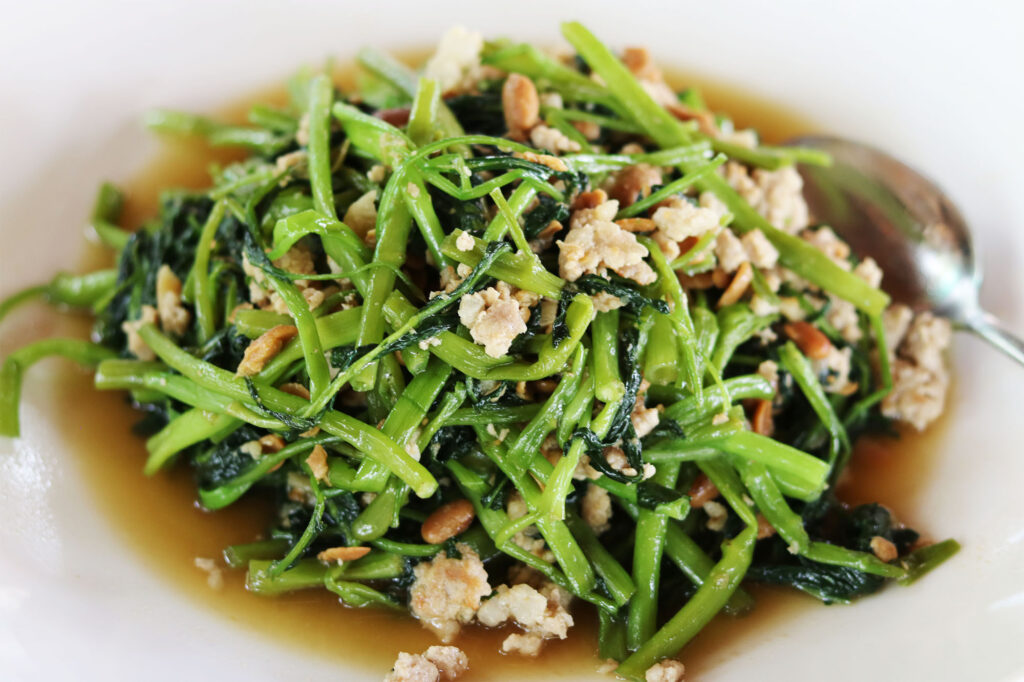
Cha Prey is a stir-fried morning glory dish prepared using young, tender water spinach stalks and leaves. The vegetable is cooked briefly over high heat with garlic, oil, and savory seasonings such as fish sauce and oyster sauce, preserving its vibrant green color and crisp texture.
In Khmer cuisine, Cha Prey is often eaten as a side dish but can also stand alone as a light meal when paired with steamed jasmine rice.
Cultural Significance of Cha Prey in Cambodia
Morning glory grows abundantly throughout Cambodia in rivers, wetlands, and cultivated fields, making it one of the most accessible vegetables in the country. Cha Prey reflects the resourceful nature of Khmer food culture, where locally available produce is transformed into flavorful, nourishing meals.
This dish is commonly found on Cambodian family tables and is frequently served alongside dishes such as grilled fish, sour soups, and stir-fried meats, providing balance and freshness.
Morning Glory in Khmer Cuisine
Known locally as prey, morning glory is prized for:
- Its crunchy stems and tender leaves
- Mild, grassy flavor
- High nutritional value, including iron and fiber
Its ability to absorb seasoning while retaining texture makes it ideal for stir-frying.
Key Ingredients in Cha Prey
Authentic Cha Prey uses minimal ingredients to highlight the vegetable’s natural flavor:
- Morning Glory (Water Spinach) – young and tender
- Garlic – primary aromatic
- Vegetable Oil – for high-heat cooking
- Fish Sauce – essential Khmer seasoning
- Oyster Sauce – optional depth
- Sugar – optional balance
- Water – small amount for steam
Optional additions include sliced chili for heat or fermented soybean paste for deeper umami.
Step-by-Step Guide: How to Make Cha Prey
Ingredients (Serves 4)
- 2 large bunches morning glory, trimmed and washed
- 4 cloves garlic, minced
- 2 tbsp vegetable oil
- 1½ tbsp fish sauce
- 1 tbsp oyster sauce (optional)
- ½ tsp sugar (optional)
- 2 tbsp water
- Optional: sliced chili
Instructions
Step 1: Prepare the Morning Glory
Trim tough ends and cut into 5–7 cm lengths. Rinse thoroughly and drain well.
Step 2: Heat the Wok
Heat a wok or large pan over high heat. Add vegetable oil and minced garlic. Stir quickly until fragrant.
Step 3: Stir-Fry the Vegetables
Add morning glory to the wok. Toss rapidly to coat with oil and garlic.
Step 4: Season
Add fish sauce, oyster sauce if using, sugar, and water. Continue stir-frying until the stems are tender-crisp and leaves wilted.
Step 5: Finish and Serve
Remove from heat immediately. Serve hot with steamed rice.
Flavor and Texture Profile
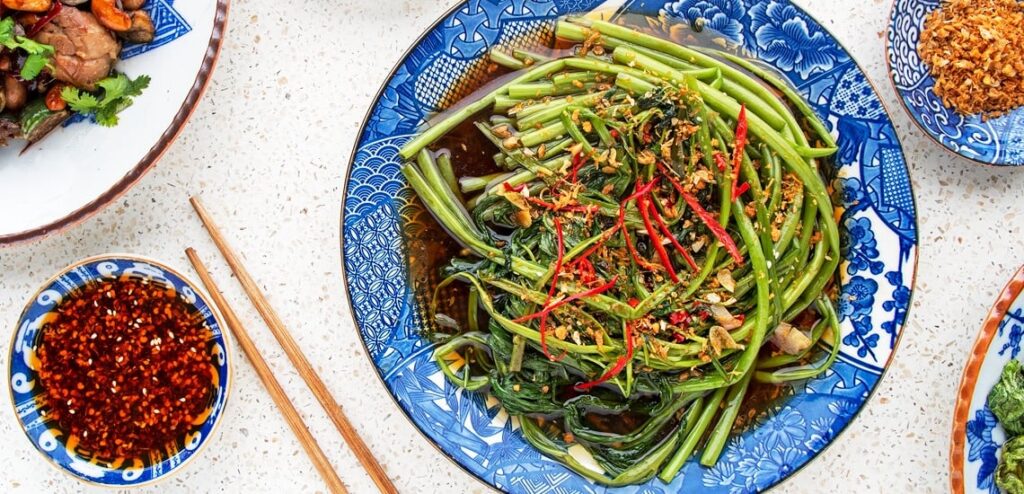
Cha Prey is savory, aromatic, and lightly sweet, with crisp stems and tender leaves. Garlic provides depth, while fish sauce enhances umami without overpowering the freshness of the vegetable.
Tips for Perfect Cha Prey
- Use high heat to avoid soggy vegetables
- Do not overcook to maintain crunch
- Add water sparingly
- Serve immediately for best texture
Common Variations of Cha Prey
- Cha Prey Kroeung – with aromatic spice paste
- Spicy Cha Prey – with fresh chilies
- Simple garlic-only version – traditional home style
Why Cha Prey Is Essential in Khmer Cooking
Cha Prey demonstrates how Cambodian cuisine elevates humble ingredients through technique and balance. It is nutritious, quick, and versatile, making it a cornerstone of everyday Khmer meals.
Learning to cook Cha Prey offers insight into Cambodian stir-fry fundamentals and the importance of vegetables in Khmer food culture.


